Interview with a Vampire
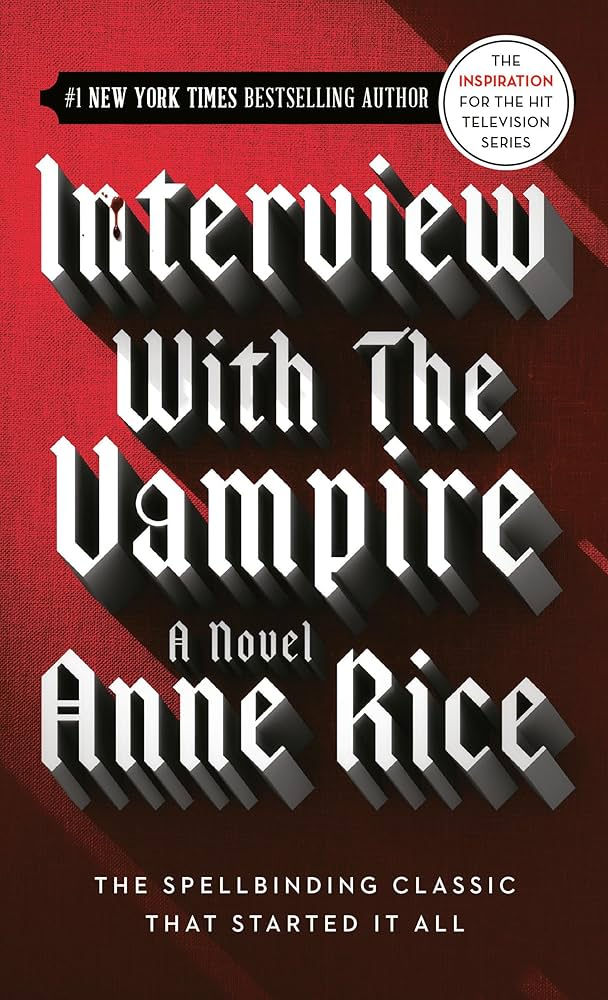
The fall season began—although the parching temperature said otherwise—and so I decided to pick up a novel that I purchased secondhand a while back: Interview with a Vampire by Anne Rice. After being introduced to this series through the 2022 television adaptation and becoming hooked, I wanted to see what changes the series writers had made to this venerable novel, as there was plenty of online discourse.
This novel opens with the introduction of the vampire, Louis de Pointe du Lac, who is telling a reporter his story. He begins with his life right before meeting his infectious maker, Lestat, in early 1791. Louis was wracked with guilt after the death of his brother and became self-destructive. Soon thereafter, he encountered Lestat, who offered him immortality, and after Louis turned, they began to live together at Louis's home. Louis clung to humanity while craving blood, causing internal struggles as he gradually adapted to his new identity.
A couple of years later, in 1795, after moving to New Orleans, the vampires came across a young orphan and soon turned her into a child vampire. Before long, chaos arose within the home of the three vampires, especially as Claudia’s resentment towards Lestat grew as he kept secrets of their history and turned her at a young age. Soon, Claudia attempts to kill Lestat. She and Louis flee to Eastern Europe in hopes of meeting other vampires to learn about their origins.
The pair would end their journey in Paris, where they encounter a group of vampires at the Theatre des Vampires, led by the charismatic Armand. Young, undead Claudia, desperate to connect with others like her, is thrilled. Oddly enough, she becomes close to a doll maker named Madeline, and soon they become attached at the hip. Eventually, the past catches up to Louis and Claudia. Vampires follow a set of rules that the pair did not know of, and as a result, there are consequences—in this case, the child-abomination suffers immolation with her new-found friend.
After Claudia’s passing, Louis burns down the Theatre des Vampires and eventually returns to New Orleans by himself in the late 20th century. During his time in New Orleans, Louis came across a disheveled Lestat, who was looking for companionship, and he rejects him. The novel ends in San Francisco, with the captivated young interviewer begging to be turned into a vampire; Louis bites him and flees, leaving the newly forged vamp to pursue Lestat.
Louis de Pointe du Lac’s evolution throughout the novel is complex. At the beginning, he is dealing with grief and hopelessness after the passing of his brother. Soon, he is thrown into a world of bloodthirsty undead and moral uncertainty, one filled with cruelty and self-indulgence. He’s desperate to find someone just like him, and the moment he finds someone whom he genuinely connects with, the new companionship wrecks his sense of humanity. Louis attracts relationships with passionate and complicated individuals, each ending in chaos. His story ends filled with loneliness, anger, and bitterness.
As captivating as the whole novel is, the scenes that I keep thinking about are when the vampires are feeding. Rice’s descriptions of these scenes make the audience feel like they are witnessing something intimate, something that should be hidden, especially given the violence of vampirism. The most disturbing element of the virulent vampire-on-human violence is the vampires’ detachment from the humanity they were once a part of.
Interview with a Vampire is a gothic horror and vampire novel that pulls the readers into a world of decay and melancholy as they follow the vampire's journey. I would recommend this novel to people who are interested in characters that are realistic and multidimensional, with the vampirism trope providing unique insights into the human propensity for dominance, immortality, and unabated consumption. As someone who had never read a book that included vampires before, I am delighted that Anne Rice’s was the first.



Comments